INDUSTRY NEWS
At the WSH Conference 2026, the Ministry of Manpower unveiled SAGE — an AI engine that reads workplace photographs and flags safety risks automatically. It goes live in early 2027, and the first thing any photo-reading AI will notice is what’s posted on your walls. Or what isn’t.
Buried in the announcements at last week’s Workplace Safety and Health Conference at Marina Bay Sands — beneath the new alliance, the higher fines and the sobering fatality numbers — was the item with the longest shadow. Minister of State for Manpower Dinesh Vasu Dash introduced SAGE, the Safety Advisory and Guidance Engine, an AI-powered platform built by the WSH Council and the Singapore Institution of Safety Officers with industry partners. Its headline capability: analyse a photograph of a workplace, identify common safety risks, recommend the relevant guidance, and translate it for migrant workers. The prototype enters testing with WSH professionals over the coming months, ahead of a planned launch in early 2027.
Why an Algorithm Is Joining the Safety Team
The context for SAGE is not technological enthusiasm — it is a fatality count moving the wrong way. Singapore recorded 21 workplace deaths so far in 2026, up from 18 at the same point last year, with a cluster of incidents between April and July that prompted a nationwide voluntary Safety Time-Out. Dash was candid about the pattern behind those numbers: accidents are increasingly happening not during high-risk, permit-controlled operations, but during routine, everyday tasks. “A momentary lapse can have fatal consequences,” he told the conference. “Sometimes shortcuts are taken. Sometimes basic safety procedures are overlooked.” When the failure mode is human attention flickering during ordinary work, a tool that never gets tired of scanning for hazards starts to look less like a gimmick and more like a missing control.
What a Photo-Reading AI Actually Sees
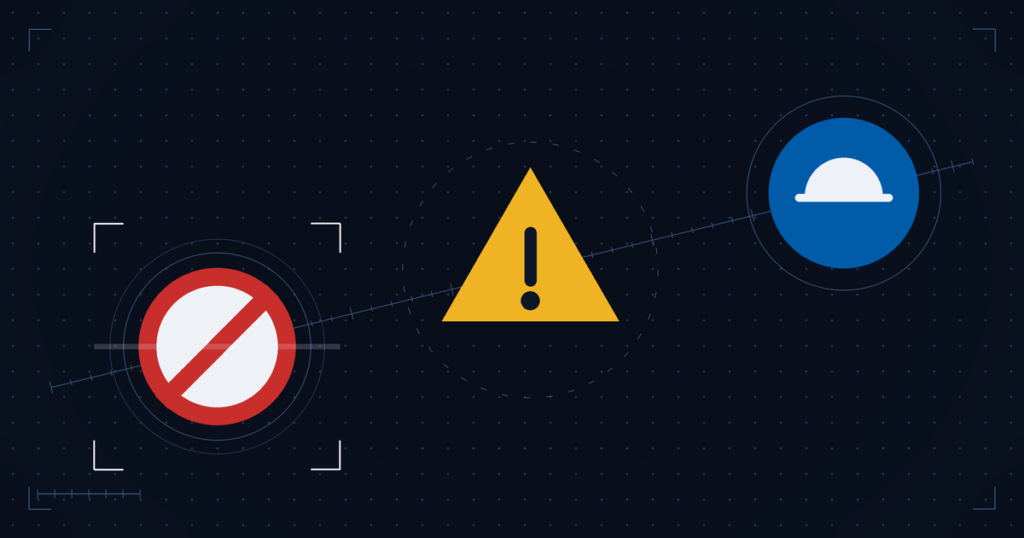
Here is the detail employers should sit with. SAGE works from photographs — the same site photos already taken for permits, toolbox meetings and progress reports. And the most machine-readable safety feature of any workplace is its signage. SS 508 signs were designed decades before AI for exactly the properties computer vision loves: standardised shapes, high-contrast safety colours, fixed pictograms from ISO 7010. A red circle with a diagonal bar, a yellow triangle, a blue disc — these are unambiguous visual data. An AI scanning a photo of your loading bay can register in milliseconds whether the forklift zone is demarcated, whether the PPE requirement is posted at the entrance, whether the fire point is marked. What SAGE will surface, in other words, is the gap between the hazards visible in the frame and the controls visible around them.
Routine Work Is Where the Signs Matter Most
The routine-task problem and the signage question are the same question. Permit-controlled work — confined spaces, hot work, lifting operations — comes wrapped in briefings and supervision. Routine work relies on ambient communication: the sign at the stairwell, the floor marking at the vehicle route, the hydration-point marker in the yard. That reliance is growing sharper at the edges of the traditional workforce. MOM reported seven work-related traffic fatalities in the first half of 2026 — already more than the whole of 2025 — four of them platform workers, prompting a new Platform Worker Safety Workgroup with unions and platform operators. The WSH Council’s “I Choose Safety” campaign asks every worker to “Look, Think, Do” before each task. The “Look” step only works if there is something correct to look at.
Getting Ready for 2027 Starts With a Camera Today
There is a simple way to prepare for the SAGE era, and it costs nothing: run the test yourself. Walk your site and photograph it the way an inspector — or an algorithm — would see it. Entrance, stairwells, electrical rooms, chemical storage, vehicle routes, fire points. Then look at each frame and ask what a stranger could tell about the hazards from the visual information alone. Faded pictograms, home-printed A4 warnings, signs hidden behind racking, or hazards with no signage at all will jump out of a photograph even faster than they jump out at a walk-through. That is precisely why MOM’s inspectors start with signage — it is the compliance layer you can audit from the gate — and why an AI trained on thousands of site photos will do the same.
Singapore’s safety regime is becoming more automated, more data-driven and less forgiving of gaps that are visible to anyone — or anything — that looks. The employers who come out ahead in 2027 will be the ones whose sites already read correctly in a photograph: every hazard matched by a current, compliant, visible workplace safety sign. Browse our full range of SS 508-compliant safety signs at safetysigns.sg.
— safetysigns.sg Team, 26 July 2026