When the Ministry of Manpower rolled out its enhanced enforcement measures on 26 June, it told employers to pay particular attention to three things: vehicle-related activities, emergency response procedures — and individual worker lapses. The first two can be engineered. The third is the uncomfortable one, because a lapse happens inside a worker’s head, usually in the two seconds between seeing a hazard and deciding it does not apply today. Twenty-one workers have died on the job in Singapore so far in 2026, up from eighteen at the same point last year, and in case after case the final link in the chain was not a missing procedure but a moment of inattention that no procedure reached.
This is exactly the territory of this year’s National WSH Campaign, launched on 15 May under the theme “I Choose Safety. Together We Care.” Its working slogan — Pause. Check. Make It Safe. — is an instruction to interrupt autopilot. And the oldest, cheapest tool for interrupting autopilot at the exact place it becomes dangerous is the humble safety sign. The problem is that most workplaces have made their signs invisible without touching them.
The Science of Sign Blindness
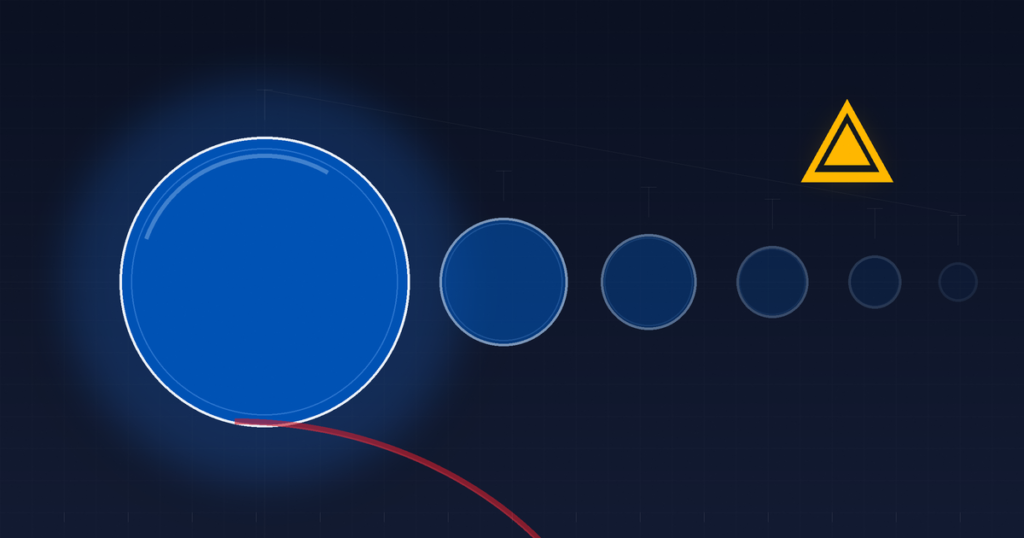
The human brain is an aggressive filter. Anything that stays constant — a hum, a smell, a blue circle on a wall — gets progressively tuned out so attention can go to whatever is new. Researchers who study warning compliance have documented the pattern for decades: a freshly installed sign changes behaviour measurably, then its effect decays as familiarity grows. The sign has not changed. The audience has. Walk your own site and test it: ask a worker who passes your PPE board daily what the third pictogram is. The honest answer is usually a guess.
Faded materials accelerate the decay. A prohibition sign whose red has bleached to salmon on a sun-facing hoarding is not just less visible — it quietly tells everyone that the rules on this site are old news. SS 508 specifies the colours precisely because the canon only works when red reads as red at a glance, amber as amber, blue as blue. A sign that no longer meets the colour spec is a sign that has retired without telling anyone.
A Lapse Is a Design Problem Too
It is tempting to file “individual lapses” under worker discipline and move on. MOM’s framing points the other way: the employer’s job is to build a workplace where the safe choice is the obvious one at the moment of decision. That is a placement question. A “hearing protection required” sign at the site entrance, eighty metres from the machine that takes your hearing, asks a worker to hold an instruction in mind through eighty metres of distractions. The same blue circle mounted at the machine itself asks for nothing — it completes the decision for him at the point where the decision happens.
The audit is simple: for every rule you expect workers to follow, find the exact spot where someone could break it, and check whether the instruction is visible from that spot. Not from the walkway. Not in the induction deck. There, at eye level, at the moment of choice.
How to Wake a Sleeping Sign
The good news is that sign blindness reverses with change, and change is cheap. Move signs to new positions on a schedule — the brain flags anything that was not there yesterday. Replace faded and damaged signs on sight, not at the next audit. Vary the format where the standard allows it — a floor marking where there was a wall sign, a larger size where the old one had shrunk into the visual noise. And prune ruthlessly: a wall carrying twelve signs communicates none of them. The standard’s discipline of one shape, one colour, one message per hazard exists precisely so that each sign can win its two-second fight for attention.
The timing matters this month. MOM’s enhanced enforcement — the S$3,000 first-offence composition fine and the minimum eight-week stop-work order — runs until at least 31 July, and the regulator has said plainly it will extend the measures if outcomes do not improve. On 23 July, the industry gathers at Marina Bay Sands for the Singapore WSH Conference under the banner “Insight to Impact.” Between now and then is a good window to make sure the signs on your site are still doing their job — because an inspector who finds a bleached warning triangle above a live hazard will not record it as a worker’s lapse. Refresh the signs your workers have stopped seeing: browse our full range of SS 508-compliant safety signs at safetysigns.sg.